
Seven Weeks of Consolation
or reflections after the Fast of Av

Hello, friends. The three-week mourning period has ended, and now we’re in a seven-week period of consolation that will take us right to the High Holy Days. I’m certainly experiencing G-d’s comforts as I write this. I’m sitting outside, listening to music, and it’s only 75 degrees out! It was in the nineties all of last week. What a relief!
But while I’m beginning on the theme of consolation, this is really a report about how I spent the Fast. It will probably explain the mourning period better than that initial post. It’s easier to explain the significance of the cycle after experiencing it. If it comes out well, I’ll probably link to it next year. I intend to explain it on a beginner’s level, but I think my fellow-frum readers will relate.
The Fast of the Ninth of Av occurs on the saddest day in the Jewish calendar. The main thing we are mourning is the destruction of our Temple. The famous Western Wall is part of the ruins.
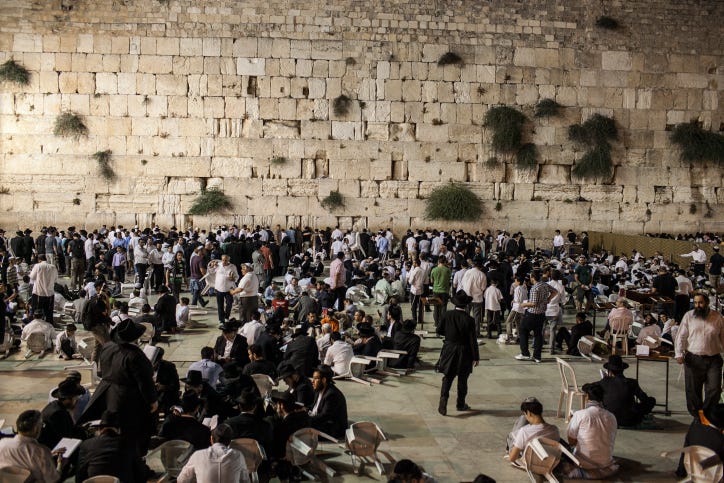
We lost the Temple not once, but twice, because it was rebuilt after the first destruction. The date is “cursed” throughout our history. Many other national calamities occurred on the same day: the Jewish expulsion from Spain in 1492, the “Guns of August” that began World War One. Actually, the two World Wars have an eerie parallel to the two Temples. The Jewish community was decimated in both, there was a lull in between the two phases, and the second was more devastating than the first.
Every year, the question comes up: are we mourning for the loss of our Temple or are we mourning because of our long and bitter history? The religious answer is the Temple, but I doubt I’m alone in saying that contemplating our history is always what gets to me. The Book of Lamentations, which we read when the Fast begins, is full of imagery of the war and starvation that the Jews endured when our Temple was destroyed. It makes me think of the Holocaust every time.
This year the mourning had an added dimension because the news out of Israel was so bad. People were calling it a “third destruction,” which is absolutely horrifying, as is the thought of civil war. The only reassurance I got was from the apparent calm of my son, bolstered by equally ordinary posts from my friends who live there. Life goes on.
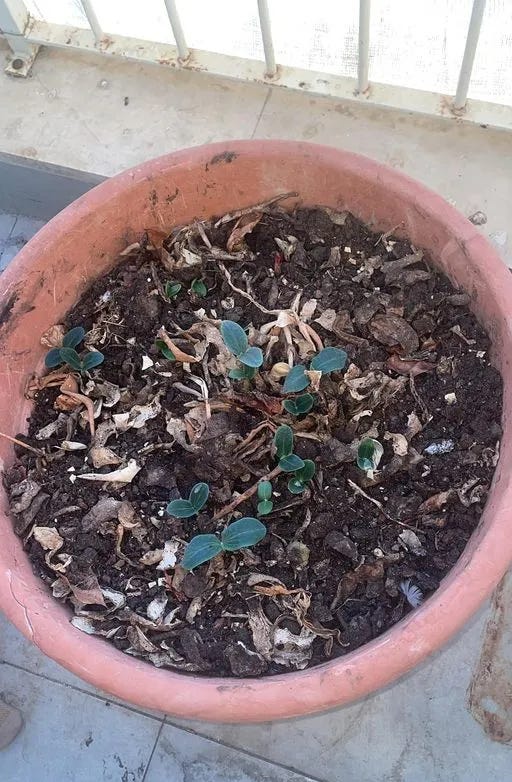
The sin that keeps us in exile is hatred amongst ourselves. Jews are meant to be a “light unto the nations,” but if we can’t get ourselves together, we’re not fit for the mission. The current divide in Israel looks especially grievous from this standpoint, and as usual, I’m divided about the divide. I lean toward the left, yet I live on the right. I think democracy has to be preserved. Am I anti-frum for saying so?
Since in-fighting is the sin that perpetuates the exile, unity is the cure, and there are always calls for it, especially during the Three Weeks. So I was pleased when friend and activist Victoria Cook announced that afternoon prayers would be held at the Israeli consulate on the day of the Fast. She described it as a way for Jews of all denominations to come together, and it sounded like the most meaningful act of unity I could possibly perform. And so, on a fast day when the real-feel temperature was 102, I went.
My first stop was the Isaiah wall across the street from the United Nations. Engraved on the wall is his famous pacifistic verse: “. . .and they shall beat their swords into plowshares, and their spears into pruning hooks; nation shall not lift up sword against nation; neither shall they learn war anymore.1”
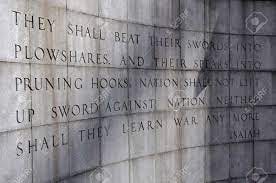
To be contemplating that verse on a wall in New York felt like a long-distance parallel to going to the Wall in Jerusalem. It’s not the real deal, of course, but it was the closest equivalent I could find.
I walked one block over to the Israeli consulate, and found it was exactly what Victoria said it would be: a mix of religious and irreligious Jews - some there to wave the Israeli flag and make a political statement, and others there to fulfill the prayer requirements of the day. Not only were we respecting each other, we were trying to do each other’s thing, as it were.
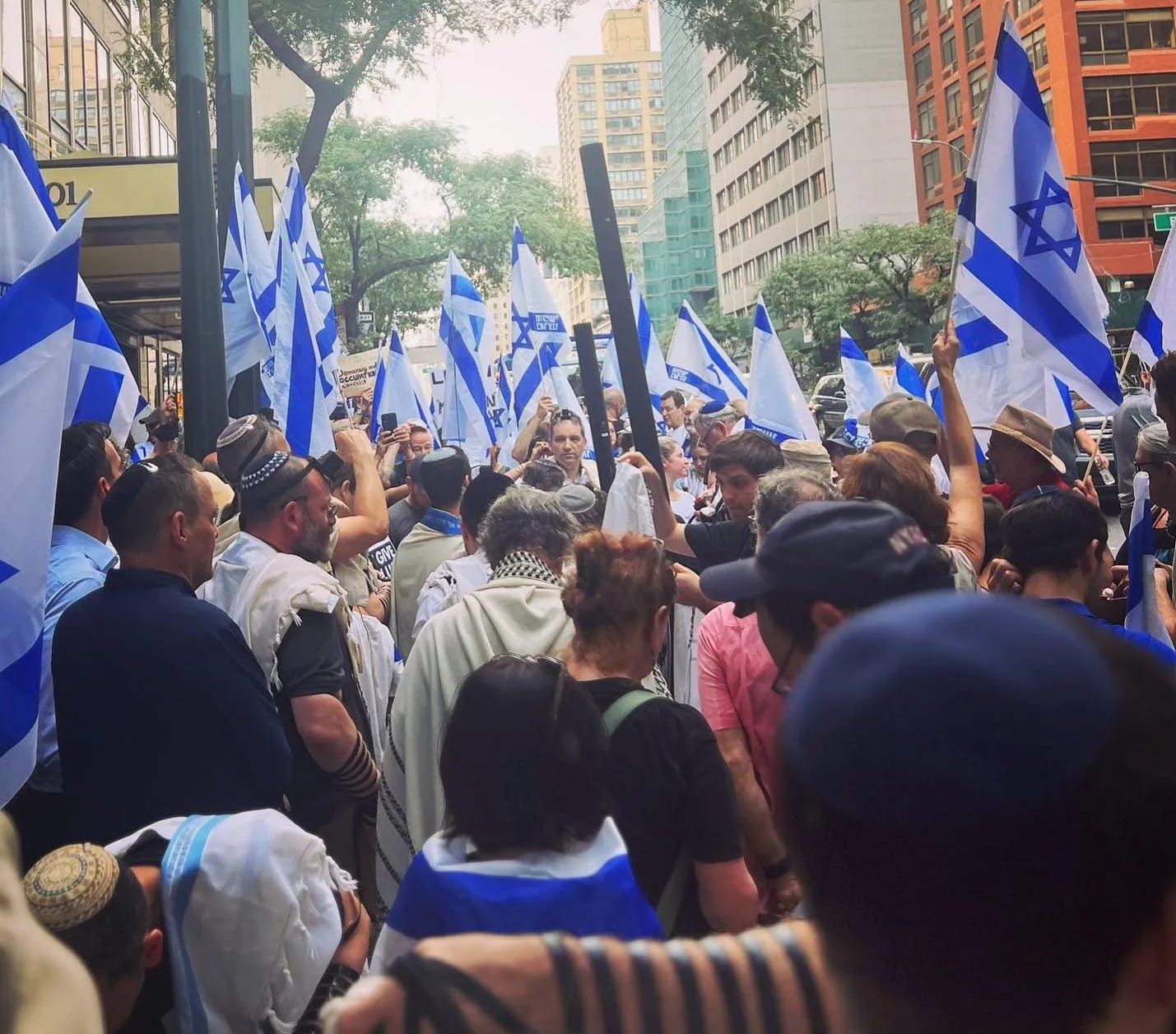
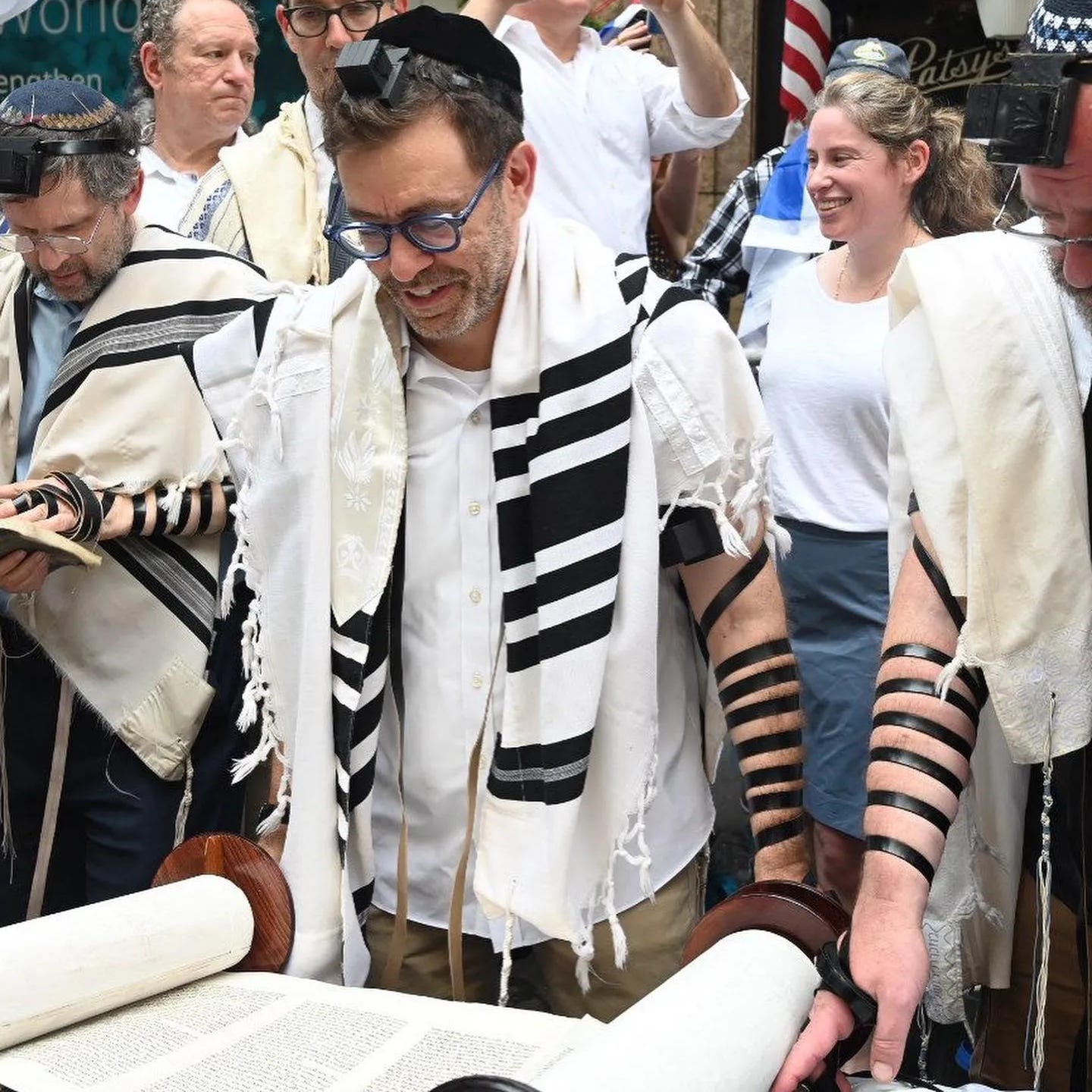
For me the most meaningful part came at the reading from the Prophets. We’d been reading the words of the prophet Jeremiah all day. He is the author of the Book of Lamentations and most of the Kinnos (prayerful dirge poems) recited in the morning. But the afternoon service marks the beginning of the transition from mourning to consolation, and so we read from the Book of Isaiah, the very prophet whose words I’d just been contemplating. The penultimate verse of the reading represents what a rebuilt Temple is meant to be, if we could only merit it: “. . .for My House shall be called a house of prayer for all the peoples.2”
While reading that, it hit me. The United Nations aspires to achieve unity amongst the nations of the world, to get us to work together toward peace and mutual prosperity. I’m sure they achieve a lot of good, but they also consistently condemn Israel. A rebuilt Temple will be what the United Nations purports to be. It will unite the nations and give the world true peace. Its presence will change our consciousness and infuse the world with spirituality. We’ll give up our squabbles, both personal and national, because they’ll seem so petty. So if you’ve never observed Tisha B’Av before, now you know what it’s about. It’s about how good the world could and should be, if only we human beings would stop mucking it up.
May Hashem rebuilt the Temple speedily in our days, and may He give us the guidance so that we all work toward peace.
Isaiah 2:4
Isaiah 56:7